Stem Cell & Cellular Therapy in Bangkok (Thailand)
Licensed Bangkok Regenerative Medicine Clinic
Miracle Regenerative Center is a specialized regenerative medicine clinic in Bangkok offering personalized MSC cellular therapy, IV nutrient programs, and longevity protocols. Our medical team designs individualized treatment plans for joint pain, autoimmune conditions, skin renewal, lung health, metabolic balance, liver support, and cardiovascular wellness.
Why patients choose Miracle Regenerative Center
- Doctor-led care from initial consultation through follow-up.
- Internationally recognised mesenchymal stem cell (MSC) protocols.
- Fully licensed by the Thai Ministry of Public Health.
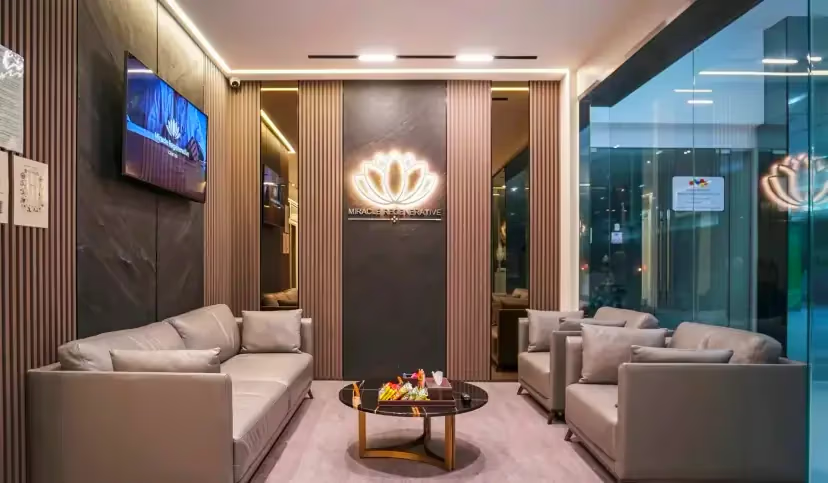
- Private treatment suites inside Bangkok Mediplex on Sukhumvit 42.
Our regenerative therapy programs
Programs include MSC therapy for joint pain and osteoarthritis, cellular therapy for autoimmune support, IV nutrient infusions, NAD+ longevity protocols, skin rejuvenation, lung function support, metabolic and weight management, liver detoxification, and cardiovascular health programs.
Patient process
- Free consultation to understand your health history and goals.
- Custom treatment plan with clear pricing, schedule, and expected outcomes.
- In-clinic treatment program with full medical supervision.
- Ongoing follow-up to track progress and adjust your plan.
Visit our Bangkok clinic
Bangkok Mediplex, Soi Sukhumvit 42, Bangkok 10110, Thailand. Open Monday to Saturday, 9 AM - 5 PM. Contact +66 81-734-2027 or reach us through the contact form.
Frequently Asked Questions
- Where is Miracle Regenerative Center located?
- Miracle Regenerative Center is located at Bangkok Mediplex, Soi Sukhumvit 42, Bangkok 10110, Thailand.
- How much does cell therapy cost in Bangkok?
- Cell therapy costs in Bangkok vary by program. Miracle Regenerative Center offers a free initial consultation to discuss personalized care plans and pricing.
- Which wellness areas does Miracle Regenerative Center support?
- Miracle Regenerative Center provides personalized cellular therapy programs focused on joint pain, mobility, osteoarthritis, nerve wellness, immune wellness, skin rejuvenation, respiratory wellness, metabolic balance, liver wellness, and cardiovascular support.
- What makes Bangkok (BKK) a destination for international patients?
- Bangkok (BKK) is recognised for its modern private healthcare facilities, experienced medical professionals, and internationally oriented patient services. Many international visitors choose Bangkok (BKK) for its convenience, hospitality, and comfortable environment during their stay.
- How do I plan my first Cell Therapy visit as an international patient?
- Patients may submit their medical history and relevant imaging for physician review. Based on the assessment, the clinic may recommend an individualised care plan, estimated timeline, and programme details. A patient coordinator can assist with scheduling and travel arrangements in Bangkok (BKK).
- What is cellular therapy and how does it work?
- Cellular therapy uses living cells, such as mesenchymal stem cells (MSCs), to support the body's natural repair and balance processes. At Miracle Regenerative Center, programs are physician-led, personalized to each patient's condition, and delivered in a licensed Bangkok clinical setting with ongoing follow-up.
- How to book a free consultation with Miracle Regenerative Center?
- You can book a free consultation by submitting the contact form on this site, sending us a message via the Contact page, or calling +66 81-734-2027. A patient coordinator will collect your medical history, arrange a physician review, and share a personalized plan before your visit to Bangkok.
- What is the difference between IV nutrient therapy and cellular therapy?
- IV nutrient therapy delivers vitamins, minerals, and protocols such as NAD+ directly into the bloodstream to support energy, hydration, and recovery. Cellular therapy uses living cells (MSCs) to support tissue repair and immune balance. Many patients combine both within a personalized program.